
Painting
Why Your Watercolor Painting Looks Streaky (And How to Fix It)
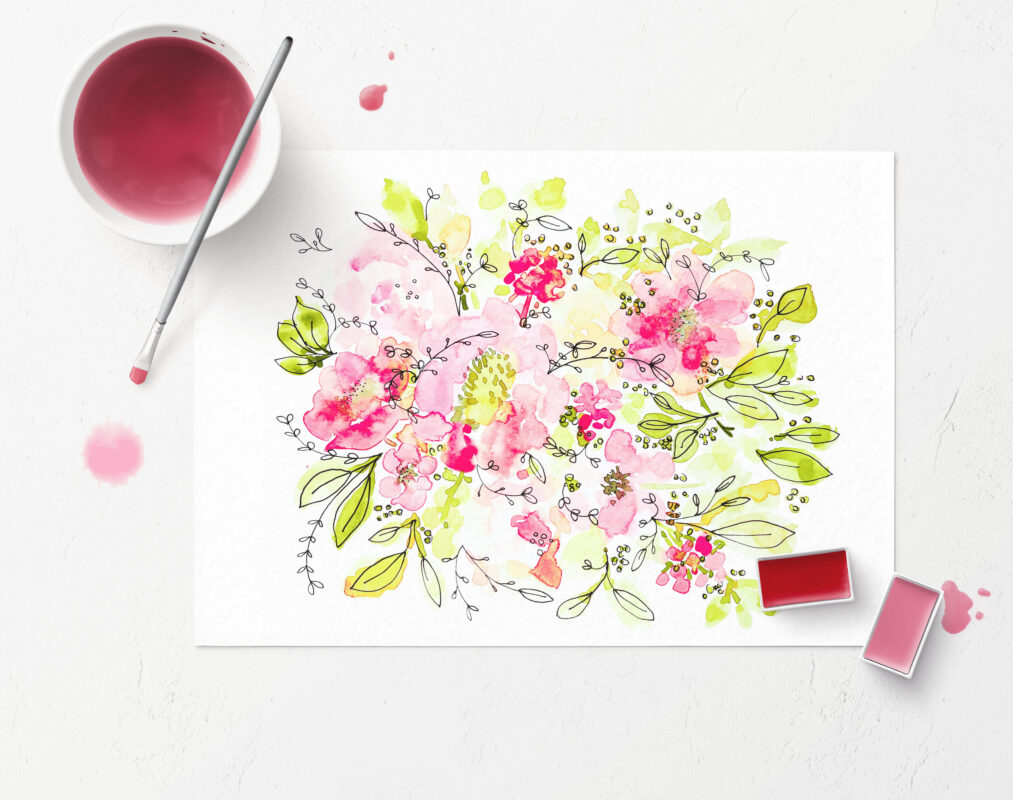
In a previous post, I talked about the six foundational watercolor techniques: wet on wet, wet on dry, dry on dry, glazing, charging, and lifting. Those techniques matter. They’re the building blocks. But in this post, we’re stepping back to the thing that makes all of them work.
Water.
Because without water… there is no watercolor.
And yet, the biggest struggle I see, especially with beginners, is fear of using too much of it. So instead, people use too little. And that’s where frustration creeps in.
The Quiet Fear Behind a Dry Brush
Most watercolor beginners are cautious by nature. They’ve heard the warnings:
- “Don’t overwork it.”
- “You’ll get blooms.”
- “The paper will buckle.”
- “You can’t fix mistakes in watercolor.”
So they do the safest thing they can think of: They barely wet the brush.
What happens next feels confusing and discouraging:
- Paint doesn’t move
- Color looks streaky or chalky
- The brush drags across the paper
- Layers look dull instead of luminous
- Nothing blends the way it’s “supposed to”
This isn’t a lack of skill. This is a lack of water.
Why Dry Brush Is So Frustrating (When You Don’t Mean to Use It)
Dry brush is a real technique—but it’s intentional. It’s used for texture, rough edges, and detail. What most beginners are doing is accidental dry brush, and it fights against everything watercolor does best.
When there isn’t enough water:
- Pigment can’t flow
- Color sits on the surface instead of sinking into the paper
- Blending becomes impossible
- You end up scrubbing instead of painting
Watercolor wants to move. It wants to bloom, soften, blend, and surprise you a little. When you don’t give it water, you’re asking it to behave like acrylic or colored pencil—and it never will.
Water Is the Engine, Not the Enemy
Think of water as the vehicle for pigment.
- More water = lighter value, softer edges, movement
- Less water = stronger color, harder edges, control
Neither is wrong. But beginners almost always start too dry, not too wet.
A helpful mindset shift:
You’re not adding water to paint.
You’re adding paint to water.
How Do You Know When You Have Enough Water?
Here are a few visual cues I teach over and over again:
You have enough water when:
- The paint glides easily across the paper
- You see a slight sheen on the surface (not puddles)
- Color spreads when you touch it with a damp brush
- The brush doesn’t feel like it’s dragging or skipping
You don’t have enough water when:
- The brush feels scratchy
- Color looks streaky or uneven
- You’re pressing harder to make paint move
- The paper starts to pill or fuzz
If your instinct is to push harder—stop and add water instead.
When Is It Too Much Water?
Yes, you can have too much water, but it’s far less dangerous than people think.
You’ve gone too far when:
- Paint runs uncontrollably into areas you didn’t intend
- You have standing puddles that won’t settle
- Everything blooms when you didn’t want it to
- Colors lose all structure
The fix is simple:
- Blot your brush
- Use it like a sponge to lift excess water
- Tilt the paper and let gravity help you
Too much water is manageable. Too little water is restrictive.
A Gentle Practice Exercise
If watercolor has been feeling frustrating, try this:
- Load your brush with more water than feels comfortable
- Add pigment to that wet brush
- Paint a simple shape, just one color
- Watch how it moves before touching it again
Let the paint do some of the work. Watercolor is a collaboration, not a battle.
The Takeaway
If your watercolor feels:
- stiff
- muddy
- scratchy
- lifeless
It’s probably not your talent.
It’s probably water.